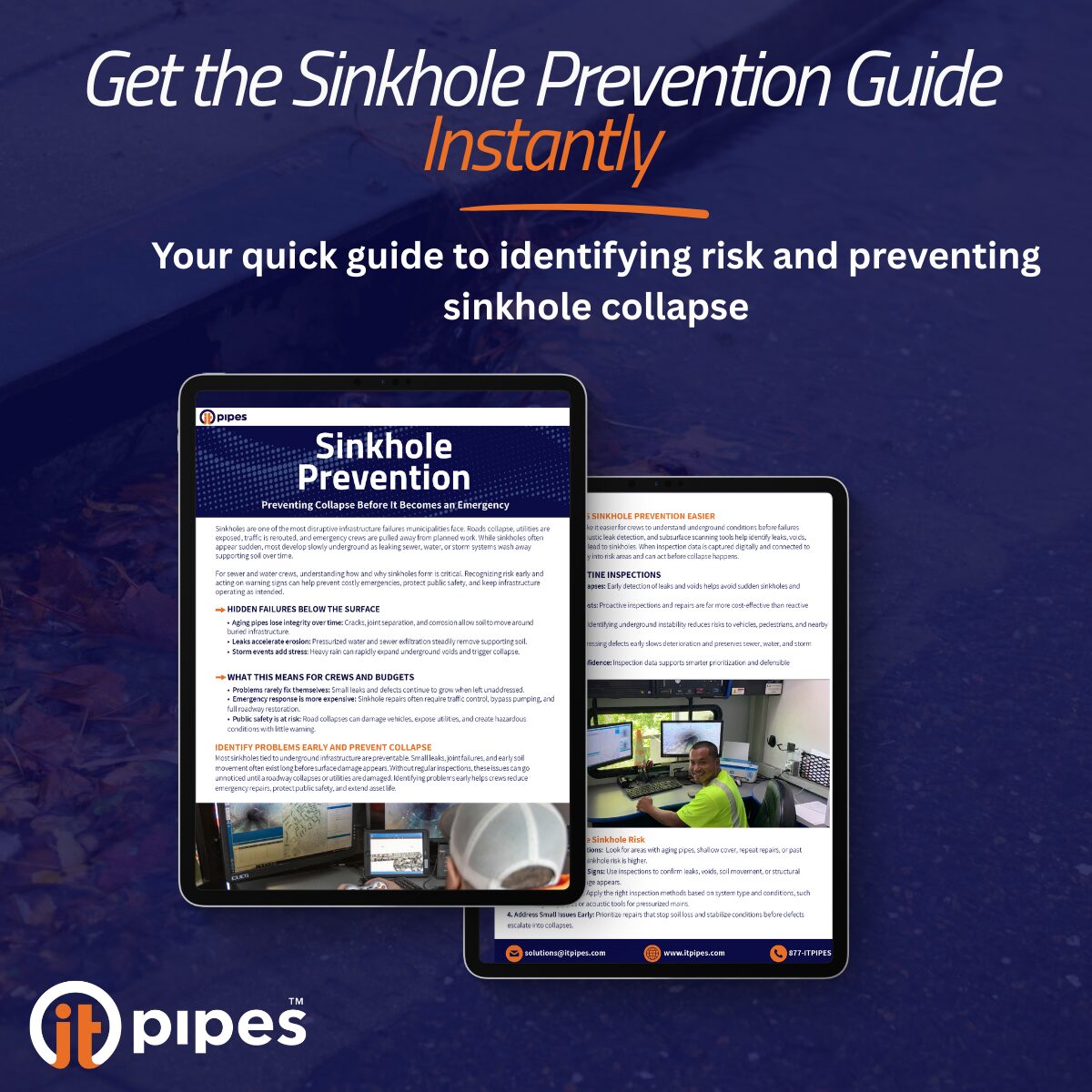
When a sinkhole appears, time is not on your side. What may begin as a small depression or soft spot in the road can quickly turn into a dangerous collapse that threatens public safety and nearby infrastructure. For sewer and water crews, the difference between a controlled situation and a costly emergency often comes down to how quickly and effectively they respond. A well-planned emergency protocol can minimize damage, protect underground assets, and restore service faster. In this blog, we outline the critical steps every crew should take during a sinkhole event, from securing the site and identifying hazards to stabilizing the area and keeping the public informed.
Securing the Site and Protecting Public Safety
The first priority in any sinkhole event is public safety. Once a depression, collapse, or suspected void is identified, the area must be immediately isolated to prevent injury or further damage.
Key first steps include:
-
Barricade and close off all vehicle and pedestrian traffic within the affected area.
-
Assess surface stability using caution. Avoid standing near the edges, as the ground may still be unstable.
-
Notify local utilities to locate and mark underground assets before additional excavation or repair work begins.
In many cases, sinkholes occur near critical infrastructure such as sewer lines, water mains, or stormwater systems. These can pose additional hazards, including the risk of gas leaks, electrical interference, or contaminated water. Crews should coordinate with local emergency management and public works departments to ensure safety protocols are followed throughout the response.
Conducting a Rapid Field Assessment
After the site is secure, the next step is determining why the sinkhole formed.
While some sinkholes develop in natural karst areas, many result from infrastructure failures.
Field crews should:
- Inspect for visible signs of broken or collapsed pipes, recent water main breaks, or active leaks.
- Document conditions through photos, drone footage, or video inspection to support both repair planning and public communication.
- Evaluate soil loss patterns to determine whether the void was caused by hydraulic erosion from leaking infrastructure or natural subsidence.
For smaller collapses, a quick inspection of nearby sewer and storm lines can often confirm whether leaks are present. Larger or recurring sinkholes may require additional tools such as CCTV inspection, ground-penetrating radar (GPR), or sonar profiling to identify voids beneath the surface.
Modern inspection tools like ITpipes SmartVision allow crews to capture data in the field, analyze footage, and integrate results into GIS and asset management systems.
This ensures field observations translate into actionable insight for engineering and planning teams.
Short-Term Stabilization Measures
Once the extent of the void is known, crews can begin stabilization. The goal is to control further erosion and restore basic functionality while preparing for long-term repair.
Common short-term actions include:
-
Flow bypass pumping to temporarily divert water or wastewater away from damaged sections.
-
Soil backfilling using compacted granular material to prevent the void from spreading.
-
Rapid-fill grout or controlled low-strength material (CLSM) to fill cavities and re-establish ground support.
Each of these approaches should be considered temporary until a full structural assessment can be completed. The priority is to reduce immediate risk and prevent further infrastructure damage.
Long-Term Repairs and Reconstruction
Permanent repair depends on the sinkhole’s cause and location. In infrastructure-related collapses, full restoration may include:
-
Replacing broken or collapsed pipe sections.
-
Improving bedding and backfill material to ensure long-term stability.
-
Repairing or sealing joints to stop infiltration or exfiltration.
-
Restoring pavement, sidewalks, and other surface features.
During this stage, crews should document all work performed, including material types, quantities, and dates, to maintain accurate asset records.
Integrating this information into your inspection or asset management platform helps track the event’s history and inform future maintenance planning.
Communicating with the Public
Transparent communication during a sinkhole emergency helps reduce confusion and maintain public trust. Municipalities should designate a spokesperson or communications lead to handle updates across channels such as websites, social media, and local news.
Important messages to include:
-
Road closure details and detour routes
-
Expected repair timelines
-
Any water or sewer service impacts (such as boil-water advisories or temporary shutoffs)
-
Safety reminders to keep residents clear of the affected area
Consistent updates demonstrate accountability and help residents understand that the situation is being managed professionally and efficiently.
A fast, organized response can make all the difference when a sinkhole appears. For sewer and water crews, safety and situational awareness come first, followed by thorough investigation and strategic stabilization.When a collapse does happen, having an established emergency response plan ensures crews act quickly, protect the public, and minimize costly damage. With today’s inspection and proactive maintenance technologies, municipalities can better understand subsurface conditions and prevent emergencies before they occur.