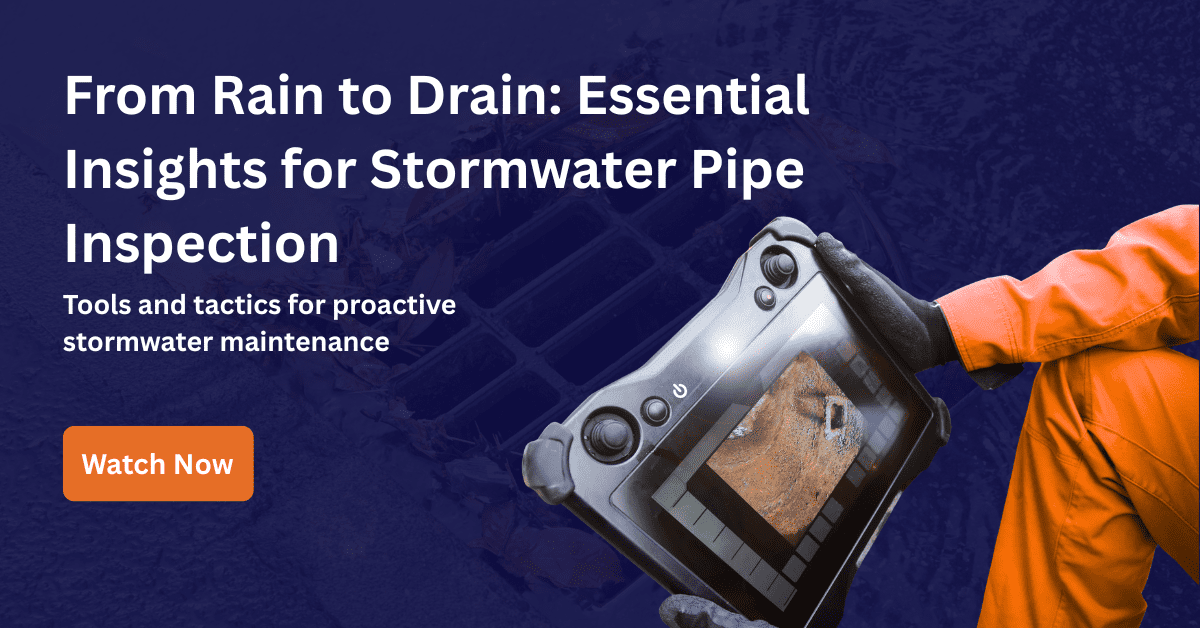
Stormwater systems are the silent workhorses of our urban infrastructure rarely noticed until something goes wrong. While sanitary sewers often dominate the spotlight due to regulatory pressures and public health concerns, stormwater systems quietly protect communities from flooding, water damage, and infrastructure failure. But that quiet presence can also lead to neglect.
In a recent ITpipes webinar, municipal experts from Hillsboro, Oregon, and Portland, Maine, joined stormwater contractors from the Gulf Coast to share what many in the field already know: stormwater infrastructure needs proactive attention, and the cost of ignoring it is higher than most realize.
Out of Sight, Out of Mind Until It’s Not
Storm pipes don’t back up into basements or require daily maintenance the way sanitary lines might. Water drains from the street, disappears into the catch basin, and seemingly everything is fine. But just because a system appears to be working doesn’t mean it’s healthy.
In many communities, storm pipes haven’t been inspected in years. In some cases, segments have never been inspected at all. Over time, debris builds up, roots intrude, joints separate, and structures decay. These issues often go unnoticed until a collapse causes a sinkhole or a plugged line floods a neighborhood.
Lane LeBlue, GIS and Asset Management Analyst from Hillsboro Public Works, summed it up perfectly: “Storm sewers are like the accounting department of infrastructure doing their job in the background, but no one notices them until something breaks.”
The Shift from Reactive to Proactive
A reactive approach to stormwater management means responding to problems as they occur. It’s also more expensive. Emergency repairs typically cost 3–5 times more than planned maintenance. And the indirect costs, property damage, traffic disruption, environmental cleanup, and public trust can be even higher.
By contrast, a proactive inspection program allows cities to:
- Identify defects before failure
- Plan maintenance and repair schedules with precision
- Allocate resources more effectively
- Avoid costly surprises
Hillsboro’s program illustrates this shift clearly. Their stormwater system includes over 313 miles of pipe, and yet only two inspection trucks are active at any time. Proactive scheduling and data-driven prioritization ensure those limited resources are deployed where they’re needed most.
Data-Driven Justification for Funding
One often-overlooked benefit of a proactive program is the ability to justify funding with hard data. Hillsboro’s inspection analysis revealed that they were significantly understaffed, leading to a successful push to increase the local service fee and expand their maintenance team.
Inspection scores, GIS mapping of defects, and video documentation make it far easier to explain why a pipe needs attention whether it’s to city councils, funding agencies, or the public. In Portland, Maine, this data is helping drive a complete overhaul of their stormwater strategy, enabling them to make smarter infrastructure investments.
Managing Risk and Flood Mitigation
With climate change increasing the frequency and intensity of storms in many parts of the country, stormwater systems are under more pressure than ever. Proactive inspections are a critical component of flood mitigation and climate resilience.
Brendan Robinson, Portland’s Water Resource Asset Manager, shared that his city is seeing a steady increase in rainfall year over year. For older cities with aging infrastructuresome of Portland’s pipes date back to the Lincoln administration understanding where vulnerabilities lie is no longer optional.
Technology Makes It Achievable
Historically, stormwater inspections were time-consuming and logistically difficult. But modern tools are changing that. Technologies like:
- CCTV inspection systems
- Assisted Inspection Coding (AIC)
- GIS integration with platforms like Esri
- Automated defect scoring and linear referencing
…are turning hours of video into actionable intelligence in a fraction of the time.
For example, Hillsboro uses AIC to accelerate inspection workflows and ensure consistency across their team. Their inspections not only meet compliance requirements, but also provide insight into where resources should be focused next.
Proactive Inspection Is a Smart Investment
Here’s what a proactive stormwater program delivers:
- Operational efficiency: Inspections are targeted, not random. Crews are deployed where they’re needed most.
- Cost control: Emergency repairs are minimized. Long-term maintenance plans reduce financial volatility.
- Regulatory compliance: Programs like MS4 require documentation and ongoing monitoring/proactive inspection helps cities stay ahead.
- Community protection: Preventing floods, sinkholes, and street damage isn’t just about cost, it’s about safety and service.
Start Small, Scale Smart
Getting started doesn’t require overhauling your entire department. Hillsboro and Portland both started with targeted inspection efforts, gradually expanding their programs as data, insights, and support grew. Even inspecting a small percentage of the system annually can deliver measurable improvements in planning and risk reduction.
Stormwater pipes may not get the headlines, but they hold the line between safe streets and costly disasters. A proactive inspection program is no longer a nice-to-have; it’s an essential part of smart, sustainable infrastructure management.
Let’s stop treating stormwater systems like second-class infrastructure. The time to invest in them is now before the next flood washes out what could have been prevented.