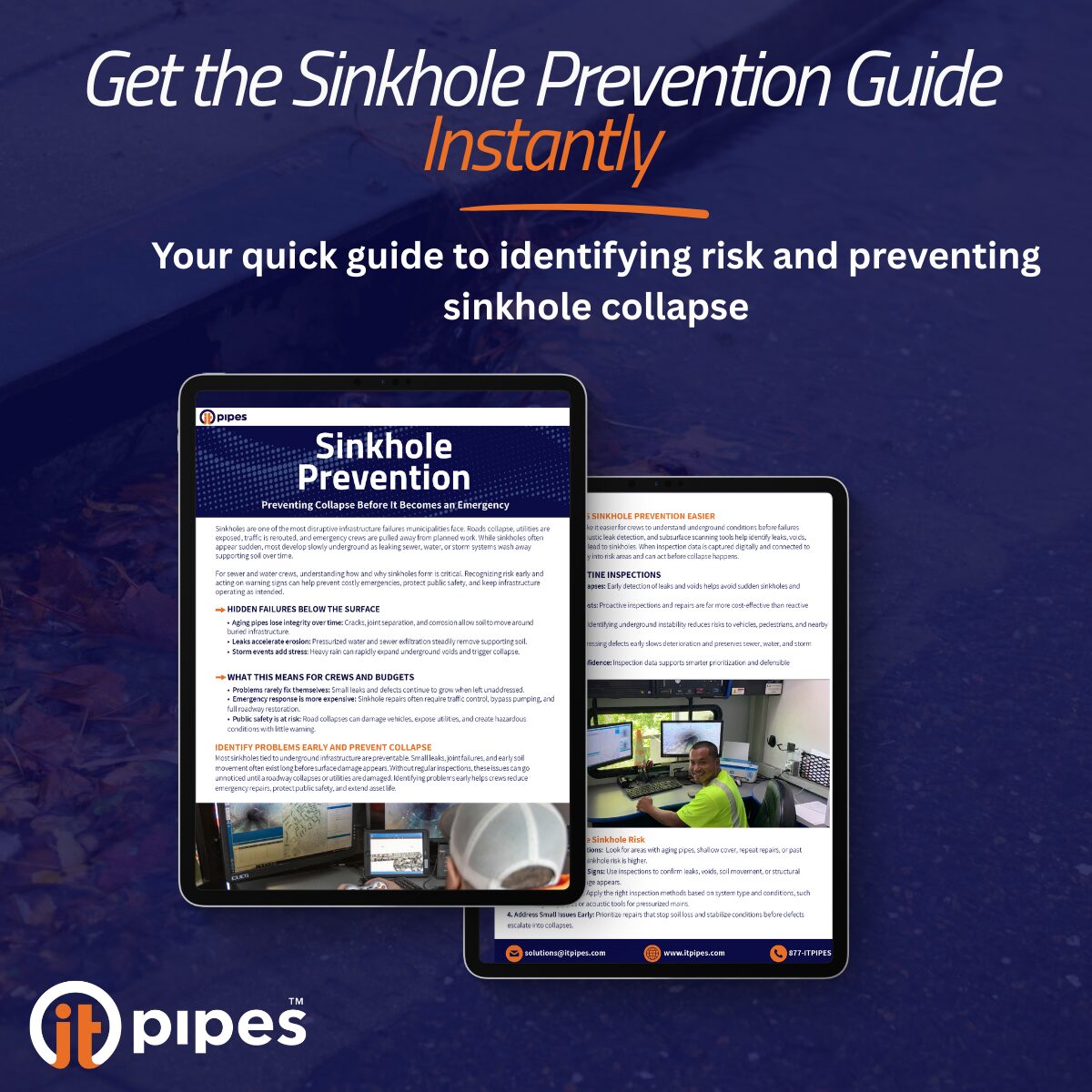
Sinkholes rarely appear without warning. They often begin as small voids underground, caused by soil erosion, leaking pipes, or deteriorating infrastructure. Over time, these hidden weaknesses grow until the surface finally gives way.
For sewer and water departments, early detection is critical. Routine inspections and the right monitoring technologies help municipalities identify risks before collapse, saving both money and public safety. In this blog, we’ll look at essential inspection tools that can detect early warning signs of sinkholes and prevent costly infrastructure failures.
CCTV Inspections – The Foundation of Pipeline Assessment
CCTV inspections remain one of the most reliable ways to evaluate the condition of sewer and stormwater systems. Crews use high-resolution cameras to record the inside of pipes, revealing:
- Cracks, joint separations, and corrosion
- Evidence of infiltration or exfiltration (water entering or leaving the system)
- Structural damage that could lead to erosion or collapse
Leaking drainage systems are a major cause of sinkholes in urban areas. Visual inspection through CCTV helps utilities identify these leaks before they wash away surrounding soil.
Acoustic Leak Detection – Hearing What the Eye Can’t See
While CCTV provides visuals, acoustic leak detection identifies hidden leaks in pressurized water systems by sound. Specialized sensors listen for the unique frequencies produced when water escapes under pressure.
This technology helps detect:
- Subsurface leaks invisible to the naked eye
- Small cracks that could grow into larger voids
- Early-stage erosion around pipe bedding
By pinpointing leaks quickly, utilities can repair failing water mains before they undermine roadways or cause a sinkhole. Many municipalities pair acoustic surveys with routine inspections to maintain an active leak detection program.
Laser and Sonar Profiling – Mapping the Shape of a Pipe
Some pipes cannot be fully inspected using cameras alone. That’s where laser and sonar profiling technologies come in.
- Laser profiling measures the interior shape of dry pipes, identifying deformation, offsets, or sediment buildup.
- Sonar profiling maps the interior of water-filled pipes, providing data on sediment levels and voids.
These technologies create a detailed 3D map of a pipe’s interior, helping crews detect early warning signs of structural compromise or erosion. Pairing sonar and laser scanning provides a complete condition assessment of both wet and dry pipelines.
Ground-Penetrating Radar (GPR) – Seeing Below the Surface
While CCTV and profiling tools work inside pipes, ground-penetrating radar (GPR) detects problems from above. GPR sends electromagnetic pulses into the ground to map subsurface conditions and identify voids or anomalies that may indicate a developing sinkhole.
This is especially useful in high-traffic areas or under paved roads where excavation is difficult. A Fairfax County report confirms that many sinkholes occur near buried stormwater or water lines due to leaking underground infrastructure. GPR can identify those weak points before collapse.
Municipalities often combine GPR scans with pipe inspections for a more complete understanding of soil stability around key assets.
Integrating Data for Proactive Maintenance
Each of these inspection methods provides valuable information, but their true strength comes from integration. By combining visual, acoustic, and subsurface data in one place, municipalities can build predictive maintenance programs that prevent failures before they start.
Software platforms can help consolidate inspection data, images, and reports, making it easier for teams to:
- Identify high-risk zones
- Track asset history and repair trends
- Share information across departments
- Justify budget and capital improvement planning
This proactive approach saves time, reduces emergency repair costs, and extends the lifespan of underground infrastructure.
Sinkholes may seem unpredictable, but the warning signs are often visible to those who know where to look. Routine inspections using technologies like CCTV, acoustic leak detection, sonar, laser profiling, and GPR allow municipalities to detect voids and leaks before they turn into emergencies.