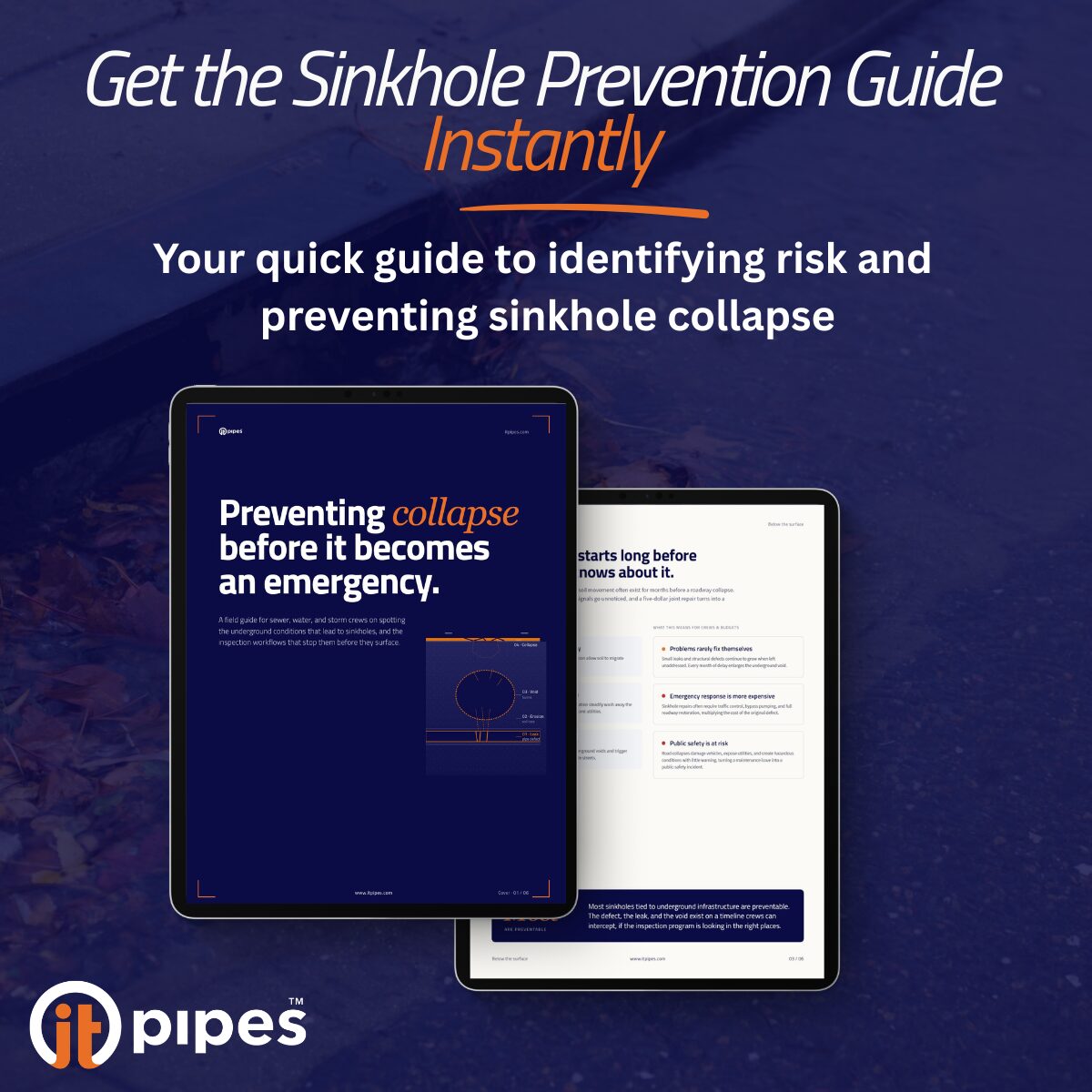
Sinkhole Prevention for Sewer and Water Crews: The Complete Guide
Who this is for:
Public Works leaders, supervisors, engineers, and field crews responsible for sewer, water, and stormwater systems who want to reduce sinkhole risk, avoid emergency repairs, and protect public safety while working within tight budgets.
What you will learn:
What sinkholes are, how they form beneath sewer, water, and storm systems, what warning signs to look for, how to respond when a sinkhole occurs, and how inspections, data, and proactive maintenance help prevent future collapses.
Contents
What Sinkholes Are and Why They Matter
Sinkholes are one of the most disruptive failures a municipality can face. Roads collapse, utilities are exposed, traffic is rerouted, and emergency crews are pulled from planned work. Public concern rises quickly, and costs escalate fast.
While sinkholes often seem sudden, most do not happen overnight. In many cases, the ground has been weakening below the surface for months or even years. Soil slowly washes away, leaving empty space underground. Eventually, the surface can no longer support the weight of traffic, structures, or rainfall, and collapse occurs.
Some sinkholes form naturally in areas with limestone or other soft rock. These are known as karst-related sinkholes. However, many sinkholes that affect streets, parking lots, and neighborhoods are caused by failing infrastructure, even in areas without karst geology.
For sewer and water crews, this distinction matters. Infrastructure-related sinkholes can often be prevented when leaks, defects, and soil movement are identified early through inspection and monitoring.
How Sewer, Water, and Storm Systems Contribute to Sinkholes
Most infrastructure-related sinkholes are caused by soil being removed from around buried pipes. This happens in different ways depending on the type of system involved.
Sewer Systems
Sewer systems rely on gravity and stable bedding to function properly. When sewer pipes crack, collapse, or separate at the joints, wastewater can leak into surrounding soil. This process is known as exfiltration.
As wastewater escapes, it carries fine soil particles with it or loosens the surrounding material. Over time, this creates voids around and above the pipe. These voids slowly grow upward until the surface loses support.
Older sewer systems are especially vulnerable. Clay pipe, brick pipe, and early concrete pipe were not designed to last forever. Many were installed decades ago and are now past their intended service life.
Water Systems
Water mains operate under pressure. This means even a small leak can cause significant damage. Pressurized water escaping from a pipe acts like a spray nozzle underground, washing soil away quickly.
Unlike sewer leaks, which may take time to cause visible damage, water leaks can create large voids in a short period. These voids often go unnoticed until a road begins to sink or collapse.
Repeated water main leaks in the same area are a strong warning sign that soil conditions are changing and that a sinkhole risk may be developing.
Stormwater Systems
Stormwater systems handle large volumes of water during rain events. Culverts, pipes, and outfalls are exposed to high flows and changing pressure.
When stormwater pipes fail, water can escape rapidly and erode surrounding soil. This erosion is often worse during heavy storms, when systems are under the most stress.
Stormwater failures are a common cause of roadway sinkholes, especially where culverts run beneath roads, driveways, or embankments.
To better understand how infrastructure failures lead to sinkholes, see How Failing Infrastructure Triggers Sinkholes.
Common Risk Factors That Increase Sinkhole Potential
Certain conditions make sinkholes more likely to occur.
Aging Infrastructure
Pipes installed 50 to 100 years ago were not built with today’s traffic loads or environmental conditions in mind. Materials degrade, joints loosen, and structural strength is lost over time.
Poor Drainage and Repeated Washouts
Areas with poor surface drainage or uncontrolled runoff experience repeated soil movement. Over time, this weakens the ground around utilities.
Soil Type
Loose fill, sandy soils, and areas with fluctuating groundwater levels are more prone to erosion and collapse.
Shallow Cover
Pipes installed close to the surface have less soil above them to distribute weight. This increases the chance that a void will lead to surface collapse.
Traffic Load
Heavy traffic, buses, and trucks place constant stress on roadways. If soil support is compromised, collapse can occur quickly.
Early Warning Signs Crews Should Watch For
Sinkholes rarely happen without warning. The challenge is recognizing the signs before failure occurs.
Common warning signs include:
- Soft spots or depressions in pavement
- Cracks forming in roads or sidewalks
- Unexplained pooling of water
- Fine soils or sediment appearing inside storm pipes
- Visible infiltration or exfiltration during CCTV inspections
- Pipes that appear misaligned, oval, or cracked
- Repeated leaks or repairs in the same location
These signs often indicate soil movement beneath the surface. When detected early, crews can intervene before collapse occurs.
What to Do When a Sinkhole Occurs
Even with strong inspection programs, sinkholes can still occur. When they do, response speed and organization are critical.
Step 1: Secure the Area
The first priority is public safety.
- Close affected roads and sidewalks
- Install barricades and cones
- Keep pedestrians and vehicles away
- Coordinate with traffic control and emergency services
Step 2: Assess the Situation
Crews should document:
- The size and shape of the sinkhole
- Visible soil loss patterns
- Nearby sewer, water, and storm infrastructure
- Signs of active leaks
Inspection tools such as CCTV, acoustic leak detection, and ground-penetrating radar can help identify the source of the problem.
Step 3: Stabilize the Site
Short-term stabilization may include:
- Backfilling voids with appropriate material
- Using grout to stop further soil loss
- Setting up bypass pumping to maintain service
Step 4: Plan Long-Term Repairs
Permanent repairs often involve:
- Replacing or rehabilitating damaged pipes
- Rebuilding proper bedding and backfill
- Restoring pavement and surface structures
Clear communication with the public about closures, detours, and timelines helps maintain trust.
For a deeper look at response steps, see Emergency Sinkhole Response for Sewer and Water Crews.
Why Inspections Are the Best Defense Against Sinkholes
The most effective way to prevent sinkholes is to identify problems early through routine inspection and monitoring.
Inspections allow crews to see what is happening underground instead of relying on surface clues alone.
Key Inspection Technologies
CCTV inspections
Used to visually inspect sewer and stormwater pipes. CCTV reveals cracks, joint failures, infiltration, exfiltration, and structural defects.
Acoustic leak detection
Helps locate hidden leaks in pressurized water systems before soil erosion becomes severe.
Laser profiling
Measures pipe shape and deformation in dry pipes, identifying ovality and structural loss.
Sonar profiling
Maps the interior of pipes that are partially or fully underwater, revealing sediment buildup and voids.
Ground-penetrating radar (GPR)
Detects subsurface voids and soil anomalies from the surface without excavation.
Learn more in Inspection Tools Every Municipality Should Use to Detect Sinkholes Early.
Turning Inspection Data Into Action
Inspection footage alone does not prevent sinkholes. Data must be organized, accessible, and used for decision-making.
Inspection software help municipalities:
- Store inspection data in one system
- Link inspections directly to GIS maps
- Track asset condition over time
- Identify high-risk areas
- Prioritize repairs based on risk
When inspections, GIS, and asset management systems work together, teams can plan maintenance instead of reacting to emergencies.
Building a Proactive Sinkhole Prevention Program
Strong programs focus on prevention, not just repair.
Key elements include:
- Risk-based inspection schedules
- More frequent inspections in high-risk areas
- Tracking historical failures and leaks
- Coordination between sewer, water, and storm teams
- Consistent data standards and documentation
Preventing a sinkhole is far less expensive than responding to one after collapse.