
Sewer & Storm

Why Waiting to Modernize Your Inspection Program Is More Expensive Than You Think

Why Waiting to Modernize Your Inspection Program Is More Expensive Than You Think

There is a version of this conversation that happens in almost every public works organization at some point. Leadership acknowledges that the current inspection workflow has inefficiencies. Everyone agrees that something should change. And then the changes get deferred, again, because the timing is never right and other “priorities” monopolize the time.

Budget cycles are complicated. Staff bandwidth is limited. A major project is about to start, or just finished, and now is not the moment. There is always a reasonable explanation for waiting.

But waiting has a cost too. It is just harder to recognize because it is not a number on a paper.. Continue Reading Why Waiting to Modernize Your Inspection Program Is More Expensive Than You Think
read more
Breaking the Bottlenecks: Where Inspection Programs Actually Lose Time

Breaking the Bottlenecks: Where Inspection Programs Actually Lose Time

Talk to almost any public works director about inspection backlogs, and the conversation eventually lands in the same place: we need more people.

It is an understandable conclusion. Crews are stretched. Regulatory pressure is intensifying. Infrastructure is aging faster than it can be assessed. Adding headcount feels like the most direct path to doing more work.

But in most organizations, the bottleneck is not the number of people. It is what those people are forced to do with their time.

Wastewater inspection programs are riddled with friction points that consume productive hours without producing any useful output. Manual data reconciliation. Batch file transfers. Inconsistent defect coding. Systems that do not talk to each other. These are not staffing problems. They are workflow problems.

Understanding where that friction lives is the first step toward eliminating it. Here are the five places where lean inspection programs most commonly lose capacity, and what it actually takes to get it back. Continue Reading Breaking the Bottlenecks: Where Inspection Programs Actually Lose Time

read more
Efficient Pipeline Management When Staffing Is Limited

Efficient Pipeline Management When Staffing Is Limited

Public works departments, engineering firms, and utilities are facing the same operational reality. Staffing levels are flat or shrinking while regulatory requirements, infrastructure age, and service expectations continue to grow.

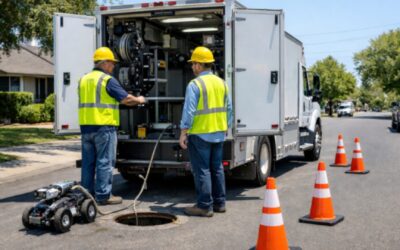
For inspection programs, this pressure shows up immediately. CCTV footage must be captured, coded, reviewed, synced, reported, and integrated into GIS or asset management systems. When teams are small, every manual process compounds the workload.

The challenge is not effort. It is workflow efficiency.

Modern inspection software solutions are changing how lean teams operate, allowing them to increase inspection output without increasing headcount. Continue Reading Efficient Pipeline Management When Staffing Is Limited

read more
From Enforcement to Opportunity: Reframing Life Under a Consent Decree

From Enforcement to Opportunity: Reframing Life Under a Consent Decree

For many organizations, receiving a consent decree feels like a defining moment, and rarely a positive one. It formalizes years or even decades of challenges such as aging infrastructure, sanitary sewer overflows (SSOs), deferred maintenance, staffing gaps, and underfunded capital programs. It also introduces strict timelines and enforceable oversight under the authority of the U.S. Environmental Protection Agency or a state regulator.

Very few organizations welcome this level of scrutiny. Yet agencies and service providers that successfully operate under a consent decree often emerge stronger, more disciplined, and better positioned to deliver reliable service long after the decree ends.

The difference is rarely luck. It comes down to mindset. Organizations that treat a consent decree as a long-term transformation program, rather than a punishment or emergency response, tend to regain control faster and sustain improvements over time. Continue Reading From Enforcement to Opportunity: Reframing Life Under a Consent Decree

read more
Inspection Tools Every Municipality Should Use to Detect Sinkholes Early

Inspection Tools Every Municipality Should Use to Detect Sinkholes Early

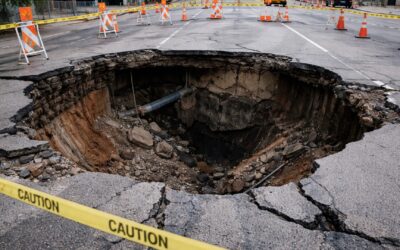
Sinkholes rarely appear without warning. They often begin as small voids underground, caused by soil erosion, leaking pipes, or deteriorating infrastructure. Over time, these hidden weaknesses grow until the surface finally gives way.

For sewer and water departments, early detection is critical. Routine inspections and the right monitoring technologies help municipalities identify risks before collapse, saving both money and public safety. In this blog, we’ll look at essential inspection tools that can detect early warning signs of sinkholes and prevent costly infrastructure failures. Continue Reading Inspection Tools Every Municipality Should Use to Detect Sinkholes Early

read more
Emergency Sinkhole Response for Sewer and Water Crews

Emergency Sinkhole Response for Sewer and Water Crews

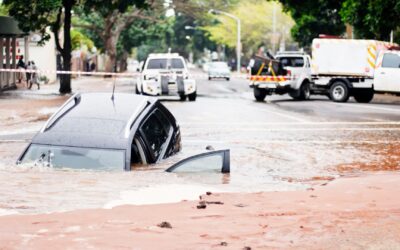
When a sinkhole appears, time is not on your side. What may begin as a small depression or soft spot in the road can quickly turn into a dangerous collapse that threatens public safety and nearby infrastructure. For sewer and water crews, the difference between a controlled situation and a costly emergency often comes down to how quickly and effectively they respond. A well-planned emergency protocol can minimize damage, protect underground assets, and restore service faster. In this blog, we outline the critical steps every crew should take during a sinkhole event, from securing the site and identifying hazards to stabilizing the area and keeping the public informed. Continue Reading Emergency Sinkhole Response for Sewer and Water Crews

read more

Categories

» Client Success Story » Support & Service » Partnership » News » Sewer & Storm » Workflow & Automation » Artificial Intelligence

Recent Posts