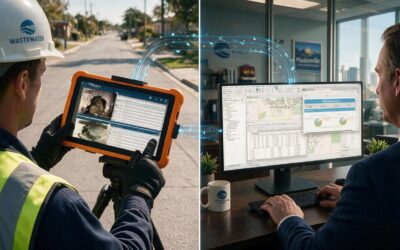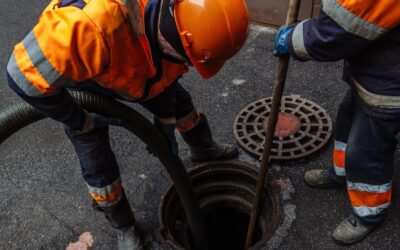
Public works and utilities leaders are the ones who defend a capital budget to a council or a board, and the quality of that defense rests on the data underneath it. Continue Reading Sewer Capital Planning: From Inspection Data to Risk Modeling
Sewer & Storm
From Reactive to Proactive: Building a Collection System Program That Drives SSOs Down Year Over Year
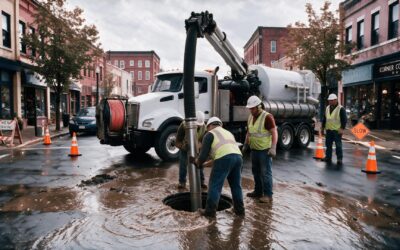
There is a version of sewer management that feels familiar to most utilities: respond to a blockage, clean the line, move on. Respond to an overflow, document it, repair what failed, move on. The cycle repeats, the backlog grows, and the system deteriorates faster than the maintenance program can address it. Continue Reading From Reactive to Proactive: Building a Collection System Program That Drives SSOs Down Year Over Year
SSO Emergency Response: What Separates a Compliant Reaction From an Effective One
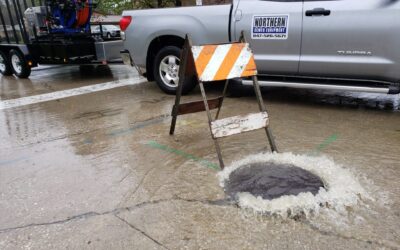
No prevention program eliminates the possibility of a sanitary sewer overflow. Pipe failures, extreme weather, blockages from illegal dumping, and equipment malfunctions occur even in well-maintained systems. As the first blog in this series laid out, the relevant question for a utility is not whether an SSO could happen. It is whether the organization is prepared to respond when one does. Continue Reading SSO Emergency Response: What Separates a Compliant Reaction From an Effective One
Sanitary Sewer Overflows: What They Cost, What Causes Them, and Where Your Next One Is Hiding
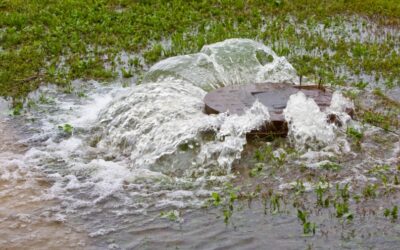
Most sewer systems go unnoticed until something goes wrong. The infrastructure runs underground, the maintenance happens quietly, and the public rarely thinks about where wastewater goes once it leaves a building. Continue Reading Sanitary Sewer Overflows: What They Cost, What Causes Them, and Where Your Next One Is Hiding
After the Consent Decree Is Lifted: How to Ensure Your Improvements Make a Lasting Impact
The end of a consent decree is a milestone worth acknowledging. Reaching that point represents years of disciplined execution, significant capital investment, and organizational change that did not come easily. For many organizations, it marks the conclusion of a period of intense regulatory scrutiny. Continue Reading After the Consent Decree Is Lifted: How to Ensure Your Improvements Make a Lasting Impact
The Infrastructure of Compliance: Building the Systems That Make a Consent Decree Manageable
A consent decree changes what is expected of an organization overnight. Reporting timelines tighten. Documentation requirements expand. Every maintenance decision, capital investment, and operational change becomes subject to regulatory scrutiny. For organizations still operating on fragmented data and manual workflows, that shift can feel impossible to manage. Continue Reading The Infrastructure of Compliance: Building the Systems That Make a Consent Decree Manageable
Why Waiting to Modernize Your Inspection Program Is More Expensive Than You Think
There is a version of this conversation that happens in almost every public works organization at some point. Leadership acknowledges that the current inspection workflow has inefficiencies. Everyone agrees that something should change. And then the changes get deferred, again, because the timing is never right and other “priorities” monopolize the time.
Budget cycles are complicated. Staff bandwidth is limited. A major project is about to start, or just finished, and now is not the moment. There is always a reasonable explanation for waiting.
But waiting has a cost too. It is just harder to recognize because it is not a number on a paper.. Continue Reading Why Waiting to Modernize Your Inspection Program Is More Expensive Than You Think
Breaking the Bottlenecks: Where Inspection Programs Actually Lose Time
Talk to almost any public works director about inspection backlogs, and the conversation eventually lands in the same place: we need more people.
It is an understandable conclusion. Crews are stretched. Regulatory pressure is intensifying. Infrastructure is aging faster than it can be assessed. Adding headcount feels like the most direct path to doing more work.
But in most organizations, the bottleneck is not the number of people. It is what those people are forced to do with their time.
Wastewater inspection programs are riddled with friction points that consume productive hours without producing any useful output. Manual data reconciliation. Batch file transfers. Inconsistent defect coding. Systems that do not talk to each other. These are not staffing problems. They are workflow problems.
Understanding where that friction lives is the first step toward eliminating it. Here are the five places where lean inspection programs most commonly lose capacity, and what it actually takes to get it back. Continue Reading Breaking the Bottlenecks: Where Inspection Programs Actually Lose Time